
What That Stuff Growing on Your House Actually Is
You bought a house. You expected a mortgage, a lawn to mow and the occasional repair you’d have to Google your way through.
You probably didn’t expect the house itself to start turning green.
Maybe it’s a patch spreading across the patio. Maybe you’ve noticed dark staining on an exterior surface that definitely wasn’t part of the original color palette. At first, you assume it’s dirt. Houses live outside, after all. They’re bound to get dirty.
Except sometimes, that stuff isn’t dirt at all.
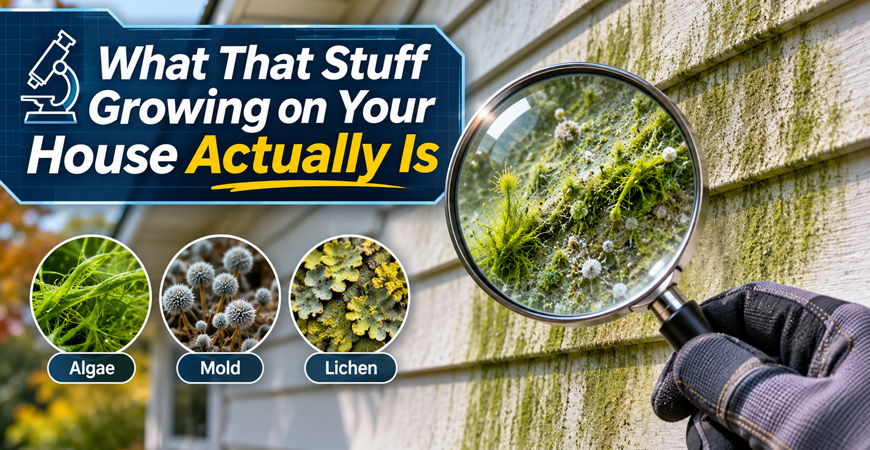
Moss, mold, mildew and algae can all show up on outdoor surfaces and leave behind black and green stains. And when you’ve never had an entire exterior to take care of before, figuring out what you’re looking at can feel like yet another thing nobody mentioned at closing.
The good news is you don’t need to become an expert in outdoor growths to take care of your home. It helps, though, to know a little about what might be growing out there, why certain spots seem to get hit harder than others and why the problem can suddenly look more noticeable at different times of the year.
Consider this your introduction to the stuff you definitely didn’t plant.
So, what is that stuff actually growing outside?
Moss, mold, mildew and algae tend to get lumped together when we talk about outdoor cleaning, but they aren’t all the same thing. They can look different, favor different conditions and show up in different ways around your property.
Fortunately, you don’t need to identify exactly what’s growing outside before you can do something about it. Still, knowing the basics can make that mysterious green patch feel a lot less mysterious.

Algae
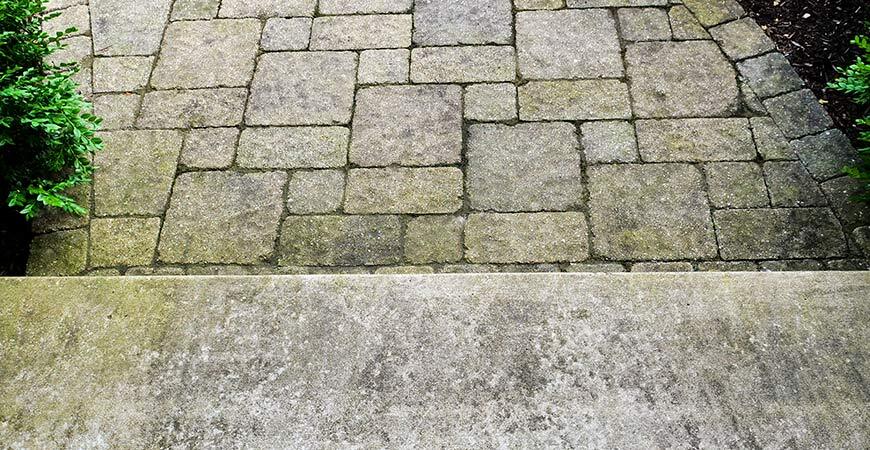
If you’re seeing green discoloration spreading across an outdoor surface, algae may be responsible. It tends to thrive where moisture is available, which is why you may notice it more in areas that stay damp or don’t dry as quickly.
It can also be easy to mistake for ordinary dirt at first. Unlike the fuzzy or leafy appearance you might associate with moss, algae can look more like a green film or staining across a surface.
That means the patio you thought was simply looking a little dingy might have something growing on it instead.
Moss
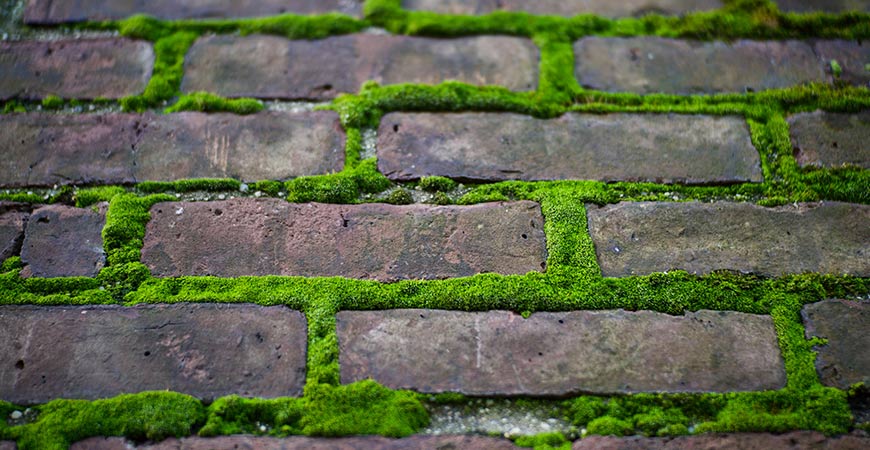
Moss tends to be easier to recognize because it has more texture. Instead of looking like a flat stain, it can form a thicker, more plant-like layer across a surface.
Think about a shaded section of a walkway that seems to stay damp long after the rest has dried. Those are the kinds of conditions where moss can become noticeable.
And while it might look charming covering a rock in the woods, it probably isn’t the landscaping feature you had in mind for your front steps.
Mold and mildew
Mold and mildew are fungi, and both can contribute to the staining and growth you notice around the exterior of your home. Moisture plays an important role here too, which is why areas that remain damp can be more prone to visible growth.
You don’t need to stand outside comparing pictures on your phone trying to decide whether a particular spot is mold, mildew or algae. From a homeowner’s perspective, the more useful takeaway is that black and green stains outside aren’t necessarily just accumulated dirt.
Once you know something may actually be growing there, you can choose a cleaning method designed to tackle it.
Why does one side of your house always seem to get it worse?
This is where your house starts teaching you something that a generic cleaning schedule never could: two areas of the same property can behave completely differently.
Imagine two sections of the same concrete walkway. One spends much of the day in the sun. The other runs alongside the house beneath the shade of a tree. After it rains, the sunny section dries relatively quickly while the shaded section stays damp much longer.
Over time, you may notice more growth and staining in that shaded spot. Shade, moisture and how quickly an area dries can all influence where outdoor growth becomes noticeable. Trees and landscaping can also affect how much sunlight reaches a surface and how long moisture sticks around.
That’s why you might see black and green stains concentrated in one area even though the surface right around the corner looks completely different.
It doesn’t necessarily mean you’ve neglected that part of your house. Sometimes that particular spot simply provides better conditions for growth.
Why some times of year make it more noticeable
There isn’t one date on the calendar when your house suddenly decides it’s time to grow algae.
What matters more are the conditions outside.
A stretch of damp weather can create a very different environment around your home than weeks of hot, dry sunshine. Higher humidity, frequent moisture and areas that take longer to dry can all make conditions more favorable for outdoor growth.
Seasonal changes can also alter the amount of sunlight different parts of your property receive. An area that was bright and sunny during one part of the year may spend more time in shade during another.
So if you suddenly notice a green patch that seemingly appeared out of nowhere, it may not actually be that sudden. Changing conditions can make existing growth more noticeable or create an environment where it can develop.
Your calendar matters less than what’s happening outside your door.
Does the surface make a difference?
Where the growth appears matters too.
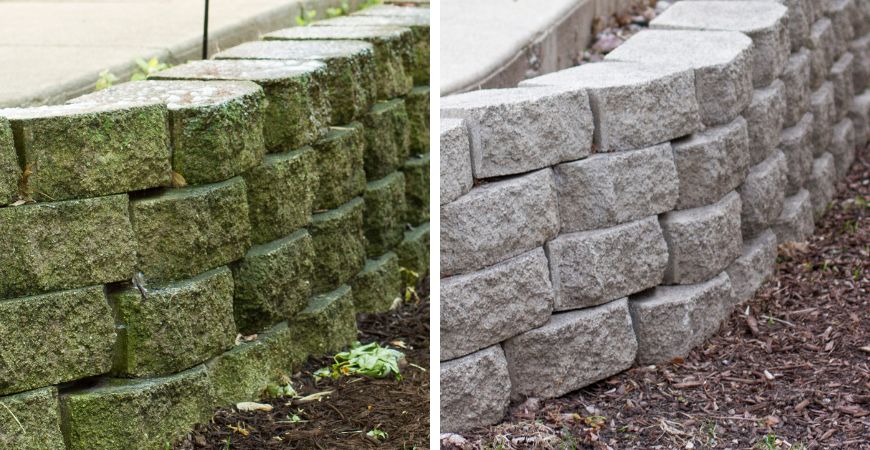
Outdoor materials don’t all interact with moisture in exactly the same way. Some surfaces are more porous or textured, while others shed water more easily. Those differences can affect how long moisture remains on the surface and how noticeable staining becomes.
That’s why black and green stains can show up across different parts of a property, from concrete steps and brick walkways to wood decks and other exterior surfaces.
You don’t need to memorize which material is most likely to develop which type of growth. The more important thing is recognizing that a stain may be more than dirt and choosing a product that can be used on the surface you’re treating.
Of course, once you figure out that something is actually growing on your house, patio or walkway, the next question is pretty predictable:
How do I get it off?
And this is usually where the scrub brush and pressure washer enter the conversation.
Your first instinct might be to scrub it off
Once you realize those black and green stains may actually be growth, the natural reaction is to figure out how to get them off.
That can quickly turn into visions of a scrub brush, pressure washer and an afternoon you’d rather spend doing almost anything else.
It doesn’t have to.
Wet & Forget Outdoor MAX tackles moss, mold, mildew and algae and the black and green stains they leave behind without scrubbing, rinsing or power washing. The formula is bleach-free and color-safe, so you can treat outdoor surfaces without reaching for bleach.
Simply spray it on and leave it. Then let Mother Nature take it from there.

Why doesn’t it disappear the second you spray it?
If you’re used to cleaners that give you an instant before-and-after moment, Wet & Forget Outdoor MAX works a little differently.
Wet & Forget works alongside Mother Nature. After you apply it, normal exposure to wind and rain helps break down and gradually wash away the treated stains over time. That means you don’t have to scrub, rinse or power wash the surface to move the process along.
How quickly you notice a difference can depend on what you’re treating. Green algae stains often begin to fade within a few weeks, while darker stains from mold and moss may take several months to diminish.
As the surface improves, you may also find that outdoor cleaning doesn’t need your attention as often.
So while you won’t necessarily spray a green patio and watch it transform before your eyes, that’s part of the appeal. Treat the surface, walk away and let wind and rain help do the work over time.
Knowing what you’re looking at makes the job easier
Owning a house comes with plenty of moments where you look at something and wonder, Is that supposed to be there?
Moss, mold, mildew and algae might be among the first additions to that list.
You don’t need to identify every patch of outdoor growth on sight or understand exactly why it chose that particular corner of your patio. Knowing that black and green stains can be more than dirt is a good place to start.
From there, taking care of them can be surprisingly simple.
Wet & Forget Outdoor MAX gives you a bleach-free, color-safe way to tackle those outdoor growths without turning them into another weekend project. Spray it, leave it and let Mother Nature help with the rest.
Turns out, the stuff growing on your house isn’t quite as mysterious once you know what you’re looking at.
Frequently Asked Questions
What causes black and green stains on the outside of a house?
Black and green stains can be caused by outdoor growths such as moss, mold, mildew and algae. Areas that stay damp, receive more shade or take longer to dry can provide conditions where these growths become more noticeable.
What is the green stuff growing on my patio or concrete?
Green growth on patios and concrete may be algae or moss. Algae often looks more like a green film or discoloration, while moss tends to be thicker and more textured. Both are more likely to become noticeable in areas where moisture lingers.
How do you remove moss, mold, mildew and algae from outdoor surfaces?
Wet & Forget Outdoor MAX tackles moss, mold, mildew and algae without scrubbing, rinsing or power washing. Simply spray and leave. Normal exposure to wind and rain helps break down and gradually wash away the treated stains over time.
How long does Wet & Forget Outdoor MAX take to work?
Results happen gradually. Green algae stains often begin to fade within a few weeks, while darker stains from mold and moss may take several months to diminish. Wet & Forget works alongside Mother Nature, with normal wind and rain helping break down and wash away treated stains over time.
Related Posts
-
Why Black and Green Stains Keep Coming Back on Outdoor Surfaces
-

How to Clean Your Driveway Without a Pressure Washer
-

Big Backyard Not Required: Outdoor Spaces Everyone Can Enjoy
-
Go Bigger, Clean Smarter: Tackle Larger Outdoor Cleaning Projects
-
Introducing New Wet And Forget Outdoor Spaces Product Line
